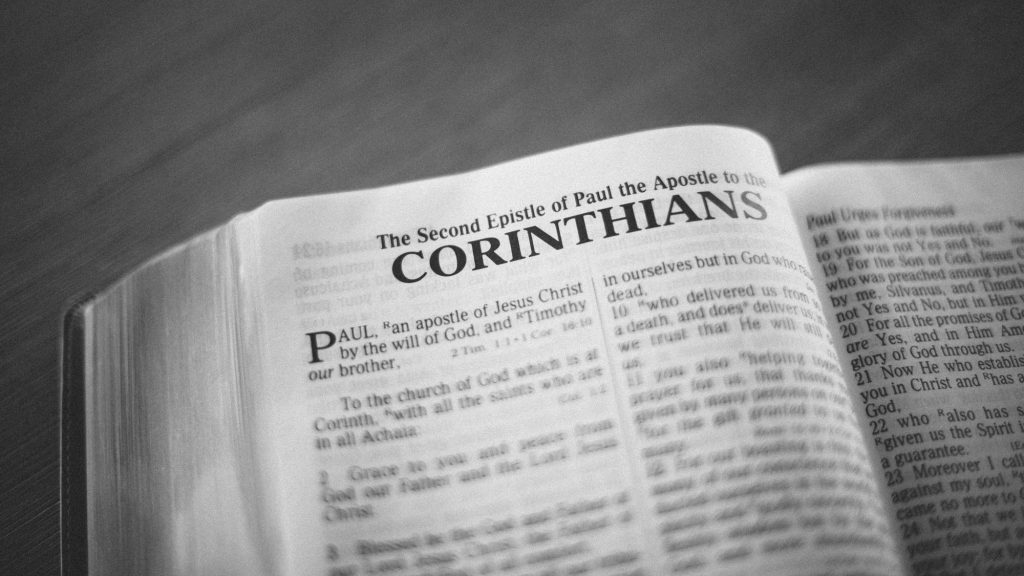
And we all, who with unveiled faces contemplate the Lord’s glory, are being transformed into his image with ever-increasing glory, which comes from the Lord, who is the Spirit. 2 Corinthians 3:18
Over the past three weeks, we’ve explored what it means to be a new creation in Christ—how “the old has gone,” “the new has come,” and how we’re “transformed by the renewing of our minds.” Today, we turn to another powerful image of transformation found in 2 Corinthians 3:18, where Paul describes our ongoing journey of becoming more like Christ as moving “from glory to glory.”
This verse follows Paul’s discussion of Moses, whose face reflected God’s glory so brightly after being in His presence that he had to wear a veil. Paul contrasts this temporary, reflected glory with the permanent, transformative glory we experience in Christ. Unlike Moses, we approach God “with unveiled faces”—with direct, unhindered access to His presence. And as we “contemplate” or “behold” the Lord’s glory, something remarkable happens: we are “transformed into his image with ever-increasing glory.”
The word Paul uses for “transformed” is again metamorphoō—the same word he uses in Romans 12:2 and the same root from which we get “metamorphosis.” This isn’t superficial change but profound transformation that alters our very nature. What’s striking here is the mechanism of this transformation: beholding leads to becoming. As we fix our gaze on Christ—contemplating His character, meditating on His words, reflecting on His actions—we gradually take on His likeness.
Notice that this transformation happens “with ever-increasing glory” or “from glory to glory” (as some translations render it). This reveals the progressive nature of our transformation. Unlike the instantaneous positional change that occurs when we become new creations in Christ, our experiential transformation unfolds over time. It’s not a single event but a lifelong journey of becoming more like the One we behold.
This progressive transformation explains the tension many of us feel between who we are positionally in Christ and who we are experientially in daily life. We are already new creations, yet we’re still being transformed. We already bear Christ’s image, yet we’re still growing into His likeness. This isn’t a contradiction but the natural progression of spiritual growth—like a seed that contains the full genetic code of the mature plant yet must develop over time.
Paul is careful to note that this transformation “comes from the Lord, who is the Spirit.” Our transformation isn’t self-improvement or moral reformation but the supernatural work of the Holy Spirit. We participate by beholding Christ and yielding to the Spirit, but the power for transformation comes from God Himself. This is why spiritual disciplines like prayer, Scripture meditation, and worship are so vital—not because they earn us anything but because they position us to behold Christ and receive the Spirit’s transforming work.
How do we participate in this “glory to glory” transformation? Here are some practical steps:
- Prioritize beholding Christ. Since transformation comes through contemplation, make spending time in Christ’s presence your highest priority. This includes Scripture reading focused on Jesus’ words and actions, prayer that involves listening as well as speaking, and worship that fixes your attention on His character and work.
- Practice spiritual rhythms. Establish regular patterns that keep you engaged with God’s presence. This might include daily quiet times, weekly Sabbath rest, monthly retreats, or annual spiritual inventories. Consistency matters more than intensity in long-term transformation.
- Lean into resistance. Transformation often accelerates during seasons of challenge or suffering. Rather than merely enduring difficult times, approach them as opportunities for deeper conformity to Christ’s image. Ask, “How might God be using this situation to make me more like Jesus?”
The journey “from glory to glory” isn’t always linear or predictable. We experience seasons of rapid growth and seasons of apparent stagnation. We have breakthrough moments and backsliding moments. But through it all, the Spirit continues His transforming work as we keep our gaze fixed on Christ. The trajectory matters more than the pace.
As we conclude our series on becoming new creations, we’re reminded that transformation is both a completed reality and an ongoing process. Positionally, we are already new creations in Christ—the old has gone, the new has come. Experientially, we are being transformed day by day, from one degree of glory to another. Both truths are essential. We don’t strive to become what we’re not; we grow into who we already are in Christ.
The journey of transformation continues throughout our earthly lives and will be completed when we see Christ face to face. As John writes, “Dear friends, now we are children of God, and what we will be has not yet been made known. But we know that when Christ appears, we shall be like him, for we shall see him as he is” (1 John 3:2). Until that day, we continue beholding and becoming, moving from glory to glory, being transformed into the image of the One we love.