PAULA WISEMAN

Faith and life meet in a story

  • Home
  • Fiction
    • Covenant of Trust Series
    • Foundations Series
    • Encounters Series
  • Bible Study
  • Devotional
  • Posts
    • Read All
    • Monday Meditations
    • Study Tip Tuesday
    • Wednesday Worship
    • Thursday in the Word
    • Writing Friday
  • Shop
  • VTreats
Home » Ezra

Posts that reference the book of Ezra

Ezra

By Paula Wiseman

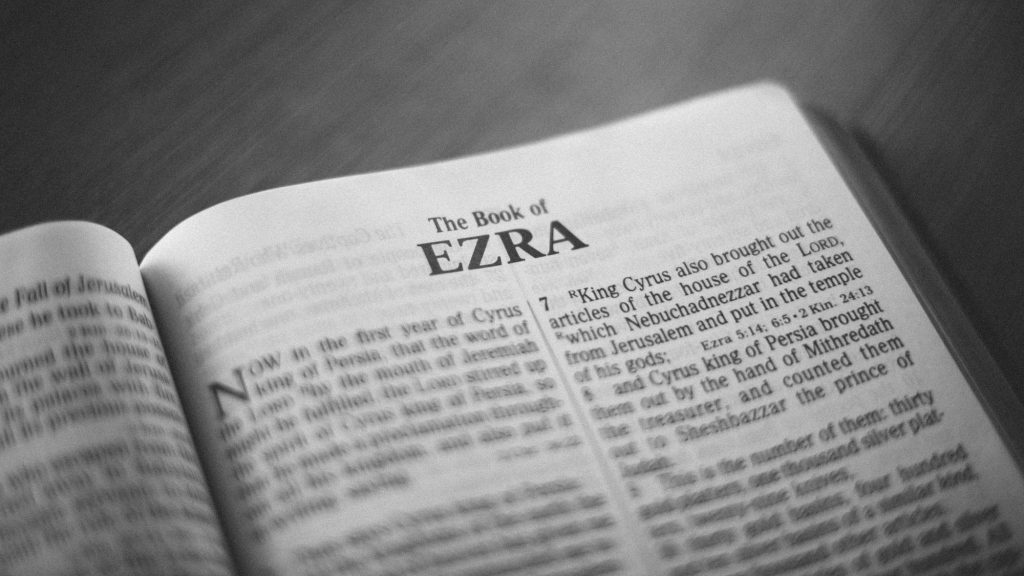
EZRA title graphic over Hebrew text

For Ezra had prepared his heart to seek the Law of the LORD, and to do it, and to teach statutes and ordinances in Israel. Ez. 7:10

According to the ancient rabbis, if Moses had not been given the Law, God would have given it to Ezra because of his worthiness. Why was he held in such high esteem?

He had prepared his heart – It’s a Hebrew idiom that means he had completely committed himself to God.

To seek the Law – He was energetically devoted to understanding God’s word.

To do it – He didn’t just want academic knowledge of Scripture. He practiced it. The things he studied were life-impacting, life-changing.

To teach it – Ezra modeled God’s ways to those around him. He was a man of integrity whose lifestyle matched his words, which were rooted in his pursuit of God.

How would our lives, our families, our churches change … if we were more like Ezra?

Filed Under: Monday Meditations Tagged With: Ezra

Revival Requires Separation

By Paula Wiseman

Revival requires separation title graphic

Revival is a distinct renewal of our spiritual life. It is marked by a re-igniting of our faith and our commitment to God and obedience to His Word. We’ve seen God move in amazing ways to revive His people through our study of Scripture. Last week, we learned revival begins when we recognize and repent of our sins. That was the key in the revival led by King Josiah. God responded to the king’s tender heart and delayed the impending judgment for the king’s lifetime. But judgment did fall. Judah went into Babylonian captivity for seventy long years. The book of Ezra recounts the return of the exiles. They overcome great obstacles and challenges but with the reconstruction of the Temple in Jerusalem, there is great joy, and the first Passover is celebrated. Ezra 6:10 gives us the key to the great revival and celebration – separation.

God’s people have always been a separate people.

Abraham had to come out from his family and homeland. He then had to separate from Lot. God called Israel out of Egypt. The Law is full of instructions about remaining a distinct people, easily identified as the people of the Lord. In the New Testament, Paul reiterates this to the church in Corinth, a church that particularly struggled with separation from the world.

The command to be separate isn’t just applicable during Bible times. Believers today need to follow the same instruction. The world needs to see that we are different, that the Gospel transforms us. If it doesn’t change us, if we aren’t different, then why should anyone follow Jesus?

Back in the land, separation came before the Passover.

The Israelites who had returned from exile ate ⌊the Passover⌋, together with all who had separated themselves from the uncleanness of the Gentiles of the land in order to worship Yahweh, the God of Israel. They observed the Festival of Unleavened Bread for seven days with joy, because the LORD had made them joyful, having changed the Assyrian king’s attitude toward them, so that he supported them in the work on the house of the God of Israel.

Ezra 6:21-22

Not everyone went into Babylonian captivity. The poorest (and those who posed no threat) were left to tend the land. Assyria in the north and Babylon in the south then brought a mix of refugees from other conquered lands. This meant the returning Jews were greeting with a group of people who didn’t share their heritage or their worship of Yahweh. But God honored the Israelites’ efforts with an amazing time of worship.

In the same way, God will honor our efforts to remove any ungodly influences from our lives. We have to see the danger first.

Vigilance is needed to maintain separation.

Not long after that Passover, Ezra the priest arrives in the land, and he discovers a critical issue. When Israel first entered the land under Joshua’s leadership, God very plainly warned them NOT to marry foreign women. Israel didn’t listen. This led to adopting foreign gods, which broke the first and second commandments and resulted in God’s judgment.

You would think after suffering through the exile, the LAST thing Israel would do after getting back into the land would be to intermarry with the local pagans. However, that was the very thing Israel did. After a time of intense prayer and intercession, Ezra tells the people in no uncertain terms:

“Therefore, make a confession to Yahweh the God of your fathers and do His will. Separate yourselves from the surrounding peoples and ⌊your⌋ foreign wives.”

Ezra 10:11

Like Israel, we can find ourselves in the same patterns that have gotten us in trouble in our past, even after times of great revival. Ezra’s advice holds for us, too. Confess that allurement that draws us to disobedience. Actively do God’s will, that is obey His commands. Finally, do whatever it takes to put those enticements out of your life. Change habits. Get rid of possessions. Even end relationships.

Unfortunately, this is not the last time Israel has to deal with this issue. We face it as well. In 2 Corinthians 6:14, the Apostle Paul warns believers about being unequally yoked, that is married to, unbelievers. This is one of the sins the people confess in a revival led by Governor Nehemiah. We’ll look closer at that revival next time.

Filed Under: Thursday in the Word Tagged With: Ezra, Revival series

Intercession: For Sin and Sinners

By Paula Wiseman

Intercession for sins and sinners title graphic

Intercession is going to God on someone’s behalf. It a holy privilege and duty, not to be taken lightly. It is strenuous and it can be messy. But it is one of the greatest ways we can minister and show love to others. We have learned from Nehemiah and his BURDEN for others, and from Daniel and his IDENTIFICATION with those for whom he was interceding. Elijah modeled how to pray for those who are sick, and Hezekiah showed us how to pray when trouble comes. Today we’ll look to Ezra and learn a less popular prayer – for sin and sinners.

Ezra was a priest who had returned to Judah with a group sent to repatriate the land after seventy years of Babylonian captivity. It isn’t long before some situations come to Ezra’s attention. These situations put the people on the very same track that landed them in captivity- not remaining pure, flirting with idolatry, intermarriage with pagans and so forth. As a good, conscientious, caring priest Ezra intercedes for the people. His prayer is recorded in Ezra 9:6-15.

Mourning for sin precedes the prayer. In verses 3-5, look at how Ezra responds to the news that his people are falling into the same trap of sin. He tore his clothes. He pulled his hair out. He pulled out his beard. He sat down dumbfounded the rest of the day. He didn’t eat or anything else. And in verse 4, he had influence on others, who also mourned the sins reported.

Do we mourn sin? That is, do we mourn the assault on God’s holiness? Or are we more likely to excuse it, to minimize it? “We’re still in a sinful body so we can’t really stop it from happening.” Or perhaps mourn the consequences we face because of our sin? Or do we use the sin of others to self-righteously feel better about ourselves? Let’s be like “all who trembled at the words of the God of Israel” and follow Ezra’s example of mourning for sin.

Ezra identifies with his people. Daniel did this too. Ezra doesn’t claim to be sinless. “O my God, I am ashamed and blush to lift my face to you,” Ezra 9:6. Nor does he whitewash what his people have done in the past. “From the days of our fathers to this day we have been in great guilt. And for our iniquities we, our kings, and our priests have been given into the hand of the kings of the lands, to the sword, to captivity, to plundering, and to utter shame, as it is today.” Ezra 9:7 He very plainly confesses the sin. “For we have forsaken your commandments, … do not give your daughters to their sons, neither take their daughters for your sons, and never seek their peace or prosperity. Ezra 9:10, 12.

Ezra leaves the outcome in God’s hands. He doesn’t make demands on God’s mercy. In verse 14, Ezra says, “Would you not be angry with us until you consumed us, so that there should be no remnant, nor any to escape?” Ezra 9:14. Rather, Ezra trusts God’s grace since he was able even to approach God with this petition. “O LORD, the God of Israel, you are just, … Behold, we are before you in our guilt, for none can stand before you because of this.” Ezra 9:15

When we begin to understand sin, we abandon any notion of pride or rights. But we also begin to glimpse what a wonder the grace of Almighty God is.

As believers in Christ, a kingdom of priests, let us see interceding for sin, for ourselves or others, as an urgent duty. Let us seek the recognition of God’s holiness and let us have faith in His ability and timing to bring punishment and restoration.

Filed Under: Thursday in the Word Tagged With: Ezra, how to pray, Intercession series

Study Tip: Ezra

By Paula Wiseman


ribbon cuttingEzra continues the history of Israel, picking up after seventy years in Babylonian captivity. We see them take their first steps toward reclaiming their nation and their place as God's chosen people. As you can imagine, things are a little shaky. This generation doesn't know much more about living as God's people than that first generation of Israelites who left Egypt. In fact, there are a lot of similarities between the two. Just like in Exodus, we find:
 
  • The institution of God's law
  • The establishment of a worship center
  • Hostility from enemy nations

And like Exodus there are occasional lengthy passages of genealogies or other details. 

 
Some things to watch for as you read:

Watch how God sovereignly directs all the events. The phrase "the hand of the Lord" is used a few times. We'll see it again in Nehemiah.
 
Notice the problems caused by compromise.
 
List Ezra's character traits. These are summarized in 7:10.
 
 
How are the principles in Ezra relevant to us?

Filed Under: Study Tip Tuesday Tagged With: Bible Book study, Exodus, Ezra, Nehemiah

Study Tip: Lists

By Paula Wiseman

(This is an encore presentation of one of my earliest tips.)

Are you a list-maker? Why do you make them? To remember things, right? Today’s tip is learn to recognize lists in Scripture.
Some of the lists you’re already familiar with- Ten Commandments, Fruit of the Spirit and so forth. Sometimes though, they are a little more subtle. For example:
  • They can take the form of instructions, like in the Great Commission in Matthew 28:19-20 “Go… teach… baptize… teach.” 
  • They can be attributes, as in 2 Timothy 1:7 “For God has not given us a spirit of fear, but of power and of love and of a sound mind.”
  • They can be an action plan. “For Ezra had prepared his heart to seek the Law of the Lord and to do it and to teach the statutes and ordinances in Israel.” (Ezra 7:10)
One of my favorite lists is in Ephesians 1:3-6. Check out the blessings in those few verses!
“Blessed be the God and Father of our Lord Jesus Christ, who has blessed us with every spiritual blessing in the heavenly places in Christ, just as He chose us in Him before the foundation of the world, that we should be holy and without blame before Him in love, having predestined us to adoption as sons by Jesus Christ to Himself, according to the good pleasure of His will, to the praise of the glory of His grace, by which He made us accepted in the Beloved.”
  1.  Every spiritual blessing (We could actually stop there. The rest of it explains some of what that entails.)
  2.  Chosen in Him before the foundation of the world
  3.  Holy & blameless before Him in love
  4.  Adopted as His children
  5.  Accepted by His grace, according to His will.
Now we could dicker about exactly how many things should or could be on the list. For example, ‘holy” and ‘blameless’ could be two separate items, but no matter how you cut it, that’s a pretty fantastic list.
There’s another in Romans 5:1-11. Check out all that ‘we’ have, what ‘we’ were and what ‘we’ are now.
Noticing or even writing down the lists causes us to slow down and consider the truth for an extra moment or two. I number the list items in the text or write them in the margin.
As you study, watch for lists in Scripture, and spend some time with them. I’d love to hear what lists you discover.

Filed Under: Study Tip Tuesday Tagged With: 2 Timothy, Ephesians, Ezra, Matthew, Romans

Study Tip: Study Like a King

By Paula Wiseman

Scroll Hebrew textAfter checking Ezra's and Daniel's Bible study examples, this week we'll look at the model for kings.

In Deuteronomy, in some of Moses' final teachings to Israel, he gives the standard for future kings of Israel.

Also it shall be, when [the king] sits on the throne of his kingdom, that he shall write for himself a copy of this law in a book, from the one before the priests, the Levites. And it shall be with him, and he shall read it all the days of his life, that he may learn to fear the Lord his God and be careful to observe all the words of this law and these statutes, that his heart may not be lifted above his brethren, that he may not turn aside from the commandment to the right hand or to the left, and that he may prolong his days in his kingdom, he and his children in the midst of Israel. Deuteronomy 17:18-20

Did you catch those details?
1. Write out a copy – longhand.
2. Keep it close.
3. Read it every single day

Moses then lists several reasons and benefits for the king if he follows this program.
1. He'll learn to fear God
2. He'll be careful to obey it God's laws. If he knows the law by heart, he won't deviate from it.
3. He won't think he's better than his subjects.
4. His reign will be extended, and his children will succeed him.

Sadly, the Old Testament history books show that few of the kings took Moses' advice.

Do you think the model is still valid? 

Enhanced by Zemanta

Filed Under: Study Tip Tuesday Tagged With: Daniel, Deuteronomy, Ezra, Moses

  • 1
  • 2
  • Next Page »

(c) 2009-2025 Paula Wiseman & Sage Words · Site Developed by Paula Wiseman · Privacy Policy

We use cookies to ensure that we give you the best experience on our website. If you continue to use this site we will assume that you are happy with it. Privacy policy
You can revoke your consent any time using the Revoke consent button.