PAULA WISEMAN

Faith and life meet in a story

  • Home
  • Fiction
    • Covenant of Trust Series
    • Foundations Series
    • Encounters Series
  • Bible Study
  • Devotional
  • Posts
    • Read All
    • Monday Meditations
    • Study Tip Tuesday
    • Wednesday Worship
    • Thursday in the Word
    • Writing Friday
  • Shop
  • VTreats
Home » Mountains series

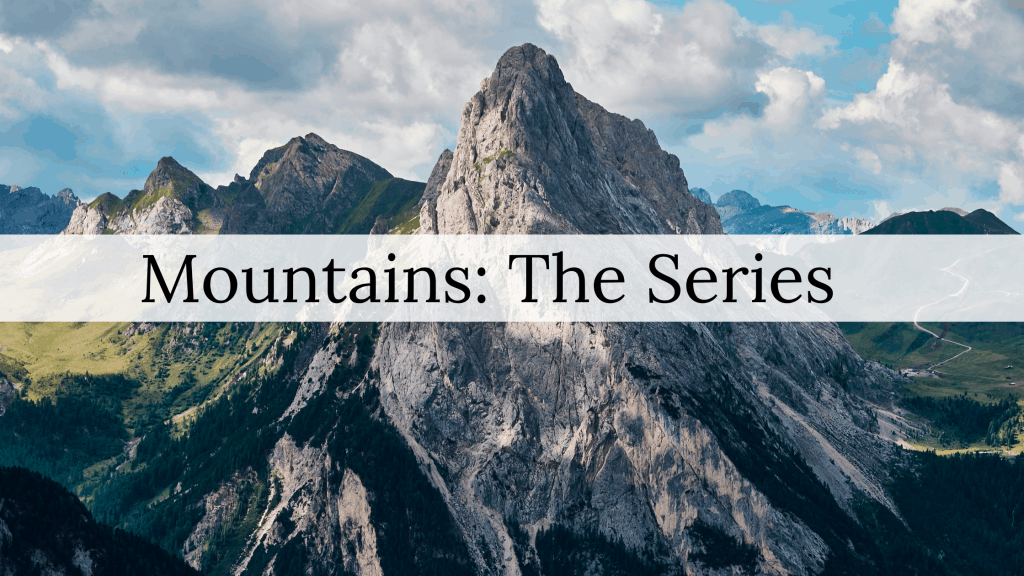
Posts from the series on mountains

Mount of Olives: Winning the Battle

By Paula Wiseman

Mount of Olives title graphic

And he came out and went, as was his custom, to the Mount of Olives, and the disciples followed him. Luke 22:39

The Mount of Olives rises 2700 feet (826 m) above the Kidron Valley. It is part of a three-peak ridge that was at one time covered in olive trees. There was a garden there. Every spring we recount the story of what happened in that garden, but it is usually just a stop along the way of a bigger story, the Easter story.

Today, let’s take a few minutes and climb one more mountain and consider what took place–and what is yet to take place–on the Mount of Olives.

It is a place Jesus resorted to often.

Luke tells us it was His custom to go to the Mount of Olives. I can imagine a visit each time He was in Jerusalem. Maybe it began when he climbed the hill with his father as a boy. In this passage, it was a place where He poured out His heart to God. We need a place, a familiar comfortable place to meet God regularly.

It was a place of sorrow and struggle.

In some ways, the battle for our salvation was won on that mountain in the intensive prayer session. Scripture doesn’t give the specifics, but I wonder if the temptation Jesus faced that night was even more strident and grueling than His time in the wilderness. In the midst of that struggle, He knew His closest friends would fail Him and abandon Him. The crowds He would soon face wouldn’t grasp what He was doing or the implications of their call for His blood. Although not as intense, we face our own moments of sorrow and struggle alone. We have faced our share of battles that have touched the deepest parts of our soul.

It was a place of deep communion.

Jesus reached out to His Father, and God sent a ministering angel to strengthen Christ. When we seek God’s face in the depths of our anguish, He hears and He sends strength and comfort.

It was a place of resolve and victory.

By the time Jesus rose to His feet, He was ready to face everything that lay ahead with steadfast resolve. He never wavered. There was no hesitation in His steps, no fear or uncertainty in His voice. Evidence of his victory came weeks later, when His friends watched Him return to the Father’s right hand from that very mountain. Zechariah tells us He will return to that spot yet again to put the final seal on His victory and receive His kingdom. That reality should strengthen our resolve. The victory is already won.

There are other mountains in Scripture besides the ones we’ve discussed. Moriah. Carmel. Tabor. Pisgah. Ebal. And others. Each one stands out from the surrounding landscape. Each one unique, both in the perspective it offers and in the experience of the climb. Perhaps your curiosity is piqued now. Even better, I hope your hunger and longing to see, to know, to experience all the mountain offers won’t let you rest until you climb the next one.


Next week is Thanksgiving here in the US.

I’ll be back the following week as we turn our hearts and our thoughts toward Advent.

Catch up on the Mountains series

Filed Under: Thursday in the Word Tagged With: Easter, Luke, Mountains series, return of Jesus, Zechariah

Hermon: Transfiguration

By Paula Wiseman

mount hermon with title

Now about eight days after these sayings he took with him Peter and John and James and went up on the mountain to pray. Luke 9:28

If you follow the movements of Jesus and His disciples, the transfiguration occurred just after Peter’s confession that Jesus was the Christ. Matthew places them in the region of Caesarea Philippi at that time. If there weren’t other unrecorded movements, then the most likely candidate for the Mount of Transfiguration is the 9100 ft (2814 m) snow-capped Mount Hermon.

While Jesus and His disciples were there on the mountain, Peter, James, and John were allowed to see beyond the veil of Jesus’s humanity to the glorified Christ. It was a moment Peter still talked about decades later in his epistle, as well he should. (2 Peter 1:16-18).

Now, I’ve done a little hiking in Colorado, and even on well-maintained trails, it is no small thing to go up on a mountain, especially one as high as Hermon. But the experience is worth it.

What did Peter, James, and John experience on Hermon?

Intimacy with Jesus – They were chosen for a unique revelation of Jesus’s glory. Nine other disciples, crowds of believers, seekers, and mere miracle-seekers missed out. Jesus wasn’t transfigured in front of the 5,000. Even now, Jesus reveals more of Himself and His ways to those who are seeking intimacy with Him.

Recognition of Jesus – Peter had JUST said Jesus was the Christ, the Son of the Living God. And he was one hundred percent correct. On Mount Hermon, that declaration became a glorious reality instead of just an abstract concept. Sometimes our familiarity with the story of Jesus causes us to lose our wonder with who Jesus is. He is the God who takes us in His arms and holds us close. But how much more amazing is that when we remember He is GOD, the God who spoke the world into existence, the God who thundered on Sinai.

Refocusing on Jesus – Jesus came to earth with a purpose that He never lose sight of – the redemption of mankind. All the miracles He performed, all the lessons that He taught were in support of His overriding mission. What Peter, James, and John saw in those moments on the mountain defied description. Even so, Jesus said don’t tell anyone until after He had raised from the dead. Going to Jerusalem, fulfilling what God had called Him to do was His focus. We, too, need to refocus ourselves on our main purpose – carrying out that gospel. It’s easy to get wrapped up in the details about Jesus, in the busyness of ministry, and lose focus. Jesus lived and ministered too. But He never wavered from His purpose.

That glory that Peter and James and John saw was not a one-time thing. We will see that same glorified Christ. Think about that for just a moment. You and I will see the glorified Christ. Not only that, He will share that glory with us.

The Transfiguration was a hint of what is to come. Peter had just confessed that Jesus was the Christ. Jesus had revealed that He was headed to Jerusalem to die, but then rise the third day. Then Christ showed His inner circle His glory. It was the final revelation, the final piece of work Jesus was to accomplish.

Even though we look back at most of it, I’m not sure we understand it much more than Peter and the guys did that day on that mountain. Hermon invites us to climb the mountain. Pray. See Him in all His glory.


Read more of the Mountains series

Filed Under: Thursday in the Word Tagged With: 2 Peter, Luke, Mountains series

Carmel: Decision

By Paula Wiseman

Mount Carmel in Israel with the title text

So Ahab sent for all the children of Israel, and gathered the prophets together on Mount Carmel. 1 Kings 18:20

Mount Carmel is part of a coastal range and rises to a height of 1724 feet (525 m) above the plain of Jezreel. Today, Israel third largest city, Haifa, sits on its northern slope. It’s not very tall, as mountains go, but it was the site of one of the most dramatic displays of God’s power in all of Scripture. (And admittedly one of my favorites.)

You remember the story. After a three-year drought, the prophet Elijah called for King Ahab to gather the people and the prophets of Baal on Mount Carmel. He intended to settle once and for all who was God in Israel. It was 450 prophets (plus another 400 on the bench) to 1. But GOD answered Elijah’s prayer with fire and proved yet again that He alone is GOD.

So what do we learn on Mount Carmel?

There is no place for waffling. In announcing the contest, Elijah first confronted the nation of Israel. “How long will you falter between two opinions?” (Kings 18:21) How long will you cherry pick the things about Baal worship that you like and fall back on the things about worshiping God that make you feel good? By definition, whoever or whatever is God in your life is the one who receives your supreme allegiance. If that is anyone other than the One True God, there will be problems. That was the case for Israel and its the case for us. (Hint: If you’re treating the worship of God like a salad bar, picking the tomatoes and leaving the cucumbers, picking the love and leaving the obedience … you can probably guess who your god really is.)

The majority was wrong. Not just the overwhelming majority of prophets, but Ahab’s court and the general population held to some degree of Baal worship. It was the state-approved religion, after all. Since Baal was the god of fertility, it seemed like a good idea to court his favor to get the drought to end. Except the majority was completely wrong. Our theology should never be left to the will of the majority but rather the revelation of God. That’s what Elijah was going on.

Rituals don’t replace relationship. The prophets of Baal had a lot of rituals that accompanied their worship, and some of them were quite intense and demanding (including bloodletting). A willingness to go to those extremes had to count for something, right? Except “there was no voice; no one answered, no one paid attention.” (1 Kings 18:29) All that energy and sincerity was wasted on empty air. Elijah knew the One True God. He heard His voice and he obeyed His commands. Because of that relationship, when Elijah prayed, God heard.

When Israel saw the fire fall, they decided pretty quickly who was God. That’s kind of a no-brainer. But consider this- you and I have not just seen, but experienced the fire of God in the person of the Holy Spirit filling us from the day we trusted Christ. And unlike the fire on Carmel, the fire in us continues to burn, to refine, to purify, to energize us. We just have to decide to live like it.


Read the rest of the Mountains series

Filed Under: Thursday in the Word Tagged With: 1 Kings, Mountains series

Gilboa: Defeat

By Paula Wiseman

mount gilboa with title text

Now the Philistines fought against Israel; and the men of Israel fled from before the Philistines, and fell slain on Mount Gilboa. 1 Samuel 31:1

Mount Gilboa rises 1627 feet (496 m) above the Jezreel Valley. Jezreel was the site of numerous battles in Scripture and there is at least one more in its future.

In the last battle of King Saul’s long career as a warrior, Israel faced its longtime enemy, the Philistines. A few chapters earlier we see that the enemy was camped at Shunem (28:4) home of the widow Elijah will encounter several hundred years later. Shunem was in the heart of Israel and the Philistine army had been able to make its way there unchallenged.

While a long character study of Saul would be insightful, it is beyond the scope of this post. The bottom line is Saul had rejected God’s commands for most of his reign. Now in this critical moment, God did not hear Saul’s prayers for courage, for comfort, for deliverance from his enemies. Saul consulted with the witch at Endor whose dire predictions proved accurate.

So what happened at Gilboa?

Reckoning – Saul’s years of disobedience resulted in God rejecting him as king. Saul’s relentless fixation on David caused him to ignore the real threat to his kingdom. Now a huge Philistine army camped in the middle of his country. All the poor decisions he had that seemingly had no consequences manifested themselves on that mountain in that battle. His army fled, his sons were killed, and eventually Saul lost his own life. If we choose to live in rebellion, disobedience or even disregard toward God, we will face a reckoning as well.

Desperation – Saul was terrified. Frantic. Shaking with fear. Out of that fear, he did something desperate (and foolish). He left the camp and traveled seventeen miles, exposing himself to the Philistines and breaking the clear law of God to consult with a witch about the coming battle. Fear drives us to desperate, foolish things, too. Sometimes it prompts to look for help and advice from sources that are counter to God.

Defeat – It was no great surprise that the armies of Israel were routed that day. There was no confession and consecration. There was no reliance on God and His power. They fought the battle on their own merits, in their own strength and the results speak for themselves. It is also important to note that Israel placed its trust in a leader who had chosen to ignore the counsel of God. They paid a heavy price for that decision. We too, will fight battles in our own strength or follow bad leaders and end up suffering the consequences.

Mountains are usually associated with great things, with victories and with revelations. We’ll even look at a few more like that, but the lesson of Gilboa is that when the self overshadows God, bad things happen and in the case of this battle, others suffer along with us.

What didn’t happen at Gilboa was perhaps more significant than what did. Saul never recognized what was actually going on, that he was reaping the harvest of his rejection of God. He also never repented. Up until the very end, he tried to do things his own way. May we help redeem Saul’s story by learning from him.

Read all of the Mountains series

Filed Under: Thursday in the Word Tagged With: 1 Samuel, Mountains series

Hebron: A Promise Kept

By Paula Wiseman

long shot of mount hebron today with post title

And Joshua blessed him, and gave Hebron to Caleb the son of Jephunneh as an inheritance. Joshua 14:13

When Israel reached the border of Canaan, Moses sent twelve men in to survey the land in preparation for taking it. Caleb was one of those men. In spite of the failure of Israel there at Kadesh-Barnea, God promised Caleb that the land he surveyed would be given to him as his inheritance. In Joshua 14, after the conquest of the land, Caleb came to Joshua to claim that inheritance, including Mount Hebron. There is a city called Hebron as well. The mountain is more of a ridge or group of hills than a distinct peak. The city sits a little over 3000 above sea level.

So what happened at Hebron?

A promise realized – Forty-five years after God declared Hebron would be his, Caleb saw that fulfilled. Forty-five years. It’s tempting to shake our heads and wonder what good the promise is if you have to wait so long to see it kept. But it is a reminder that God is working an eternal plan, not a temporal one. The here and now is not nearly as important as the there and then. God, however, is as faithful to a forty-year promise as He is an eternal one.

A commitment affirmed – Hebron is evidence of Caleb’s whole-hearted commitment to follow God. It was a commitment that did not waver even when he and Joshua were the only two people in the entire nation who believed God would give Israel the land. Even when the nation demanded his death by stoning for the mere suggestion. Our commitment wavers in the face of far, far less opposition.

A reward received – In Joshua 14:9, Caleb reminds Joshua, So Moses swore on that day, saying, ‘Surely the land where your foot has trodden shall be your inheritance and your children’s forever, because you have wholly followed the LORD my God.’ This was a restatement of God’s own declaration in Numbers 14:24. We don’t serve God for what we get out of it. That was Satan’s premise in his attacks on Job. However, it is undeniable that God takes note and rewards faithful obedience to Him. He rewards us with the intangible wonder of knowing Him more intimately, with the riches of His grace. At times, He rewards with the more tangible as a testimony to His goodness.

A new challenge undertaken – Caleb had no illusions about Hebron. He knew the Anakim, the giants, were there. He knew the cities were strong and fortified. But he also knew that God had kept him alive and strong, and if God continued to be with him, he would drive the Anakim out. Sometimes God responds to faithfulness, not with a promise of leisure, but the next –greater– task. May we meet them like Caleb, assured that the God who brought us to it, will bring us through it.


Read all the Mountains series

Filed Under: Thursday in the Word Tagged With: Joshua, Moses, Mountains series, Numbers

Sinai: Where God Came Down

By Paula Wiseman

Mount Sinai with title text

For they had departed from Rephidim, had come to the Wilderness of Sinai, and camped in the wilderness. So Israel camped there before the mountain. Exodus 19:2

Jebel Musa, the mount of Moses, rises 7,500 feet above the wilderness of the Sinai peninsula and is believed to be the mountain where Moses met God. A good case can also be made for Ras es-Safsafeh a 6,540-foot peak just to the north of Jebel Musa. It features a wide plain where the Israelites could have made camp.

Sinai is the most famous mountain in Scripture. Even the non-church crowd knows the story of Moses getting the Ten Commandments on the mountain. But with the high drama of the giving of the Law with the thunder and lightning that accompanied God’s appearance, and the fact that the account is spread over several chapters, it is easy to miss all that happened at Sinai.

So what happened at Sinai?

It was a place of commitment. The Red Sea had been parted. The Egyptians destroyed. At Sinai God makes an amazing offer. “If you will indeed obey My voice and keep My covenant, then you shall be a special treasure to Me above all people.” (Exodus 19:5.) God had demonstrated His power on Israel’s behalf through plagues, deliverance, and miracles. He affirms His covenant and His choice of Israel and asks for their commitment.
Then all the people answered together and said, “All that the LORD has spoken we will do.” (Exodus 19:8) God has demonstrated His power on our behalf through the resurrection of Jesus Christ. How’s our commitment to Him?

It was a place of consecration. Then the LORD said to Moses, “Go to the people and consecrate them today and tomorrow, and let them wash their clothes.” (Exodus 19:10) Consecrate means set apart for God’s use. Why is laundry part of that? It looked forward to putting on the righteousness of Christ.

It was a place of meeting. For on the third day the LORD will come down upon Mount Sinai in the sight of all the people. (Exodus 19:11) Think of it. God Himself came down to the mountain in the sight of all the people. Through Christ, we have that kind of access available to us.

Chapters 20-23 recount the laws and regulations God gave the nation. This is where it’s easy to drop the narrative thread.

It was a place of promise. Behold, I send an Angel before you to keep you in the way and to bring you into the place which I have prepared. (Exodus 23:20) God sends His personal representative (perhaps Christ Himself) to ensure that Israel comes into the Land God prepared and promised them. We have the Holy Spirit as the guarantee that God will keep the promises He made us.

It was a place of worship. Now He said to Moses, “Come up to the LORD, you and Aaron, Nadab and Abihu, and seventy of the elders of Israel, and worship from afar. (Exodus 24:1) This is an incredible invitation. Even though it says “afar” God invites the priests and the representatives of the people to come as close as they could humanly approach. We are a kingdom of priests and the people of God. The invitation still stands and through Christ, we are privileged to draw near.

It was a place of fellowship. So they saw God, and they ate and drank. (Exodus 24:11b) A banquet in the presence of God. A wondrous as that is… we will enjoy a banquet of our own one day.

Israel spent almost a year at Sinai. We would do well to spend some time in a place of consecration, meeting, promise, worship, and fellowship. Maybe starting today.

Next up: Hebron

Read all of the Mountains series

Filed Under: Thursday in the Word Tagged With: Exodus, Moses, Mountains series

  • 1
  • 2
  • Next Page »

(c) 2009-2025 Paula Wiseman & Sage Words · Site Developed by Paula Wiseman · Privacy Policy

We use cookies to ensure that we give you the best experience on our website. If you continue to use this site we will assume that you are happy with it. Privacy policy
You can revoke your consent any time using the Revoke consent button.