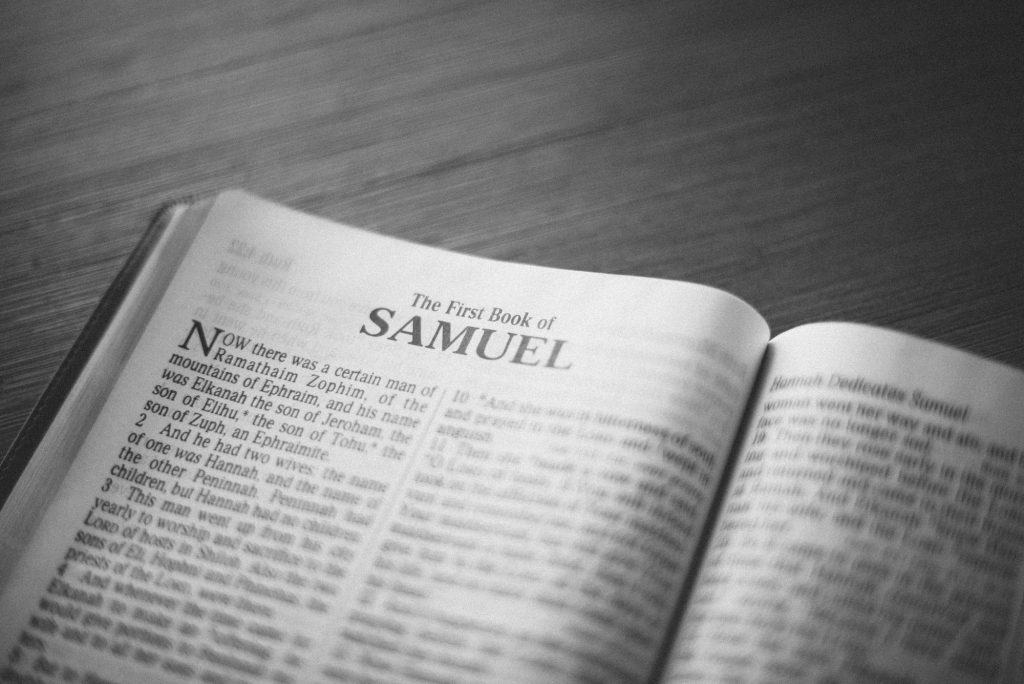
And Hannah prayed and said: “My heart rejoices in the LORD; My horn is exalted in the LORD. I smile at my enemies, Because I rejoice in Your salvation. 1 Samuel 2:1
Hannah was childless. 1 Samuel chapter 1 describes her frustration and despair in the face of infertility. It also records her petition to God at Shiloh. Chapter 2 records her prayer after receiving her petition.
We looked at this chapter at a recent worship retreat, and honestly, it troubled me. Hannah got what she wanted. It is easy to praise and worship God when He gives us our heart’s desire. What happens when He doesn’t? What about the people who earnestly pray but never receive their petitions? How do they find the words to praise or the heart to worship? How do we get to the place where the prayer in Chapter 2 happens regardless of every other circumstance?
Often I’m better at asking questions than answering them, but let me offer some points to consider.
Our definition of answered prayer is messed up. The truth is God answers every single prayer we offer. Every one. We tend to only count the answers we like. When we get what we want, we testify to answered prayers. When we don’t … we bemoan God’s silence or His inattentiveness.
Let’s look at an example from Hebrews 11, the roll call of faith. We celebrate that litany of victory and deliverance, but things change in verse 35:
Women received their dead raised to life again. And others were tortured, not accepting deliverance, that they might obtain a better resurrection. Hebrews 11:35
Did you catch that? Some were raised from the dead. Some were tortured to death. They are listed side by side. The outcome is not the final word on faithfulness. In the same way, the outcome is not the final verdict in answered prayers. However, the answers are always rooted in a plan that most of the time we will not see or understand. That is a hard thing to accept.
If you’ve been with me for a while, you know that several years ago we were certain that God was leading us to pursue adoption. The process took years. It was frustrating, with lots of red tape and hoop-jumping, not to mention the financial end of things. Then days before things would be final, it all collapsed, and we were left empty-hearted. In our bewilderment, the question God posed was, will You still trust Me? Who else can I trust? You have the words of eternal life.
Those words, eternal life, that’s what I need. My wants, even my heart’s desires, are usually focused squarely on the here and now. My needs are much deeper. Which brings me back to Hannah. If you read the entirety of her prayer in 1 Samuel 2:1-10, she doesn’t mention the baby. Not once. She mentions God’s sovereignty, His power, His might and His salvation. I think that was her takeaway. God was going to meet her greatest need, for salvation. He was going to provide Israel with a judge. In time He would send His anointed Deliverer. She understood her needs outweighed her wants.
God challenges me to look beyond those wants to my needs which He graciously fulfills. This is not to say it’s an easy thing to accept when you don’t receive. On the contrary, it’s painful, and it can’t be covered over by praise songs, or devotionals, or platitudes. But it forces me to face the question: do I love God or just the things He gives me?
No one is holy like the LORD, For there is none besides You, Nor is there any rock like our God. 1 Samuel 2:2
Think back to a time when you didn’t receive your petition. How did you respond? How did you grow as a result?


The last history book in the Old Testament is Esther. Although Nehemiah, Ezra and Malachi include a few later events, Esther closes the story of the Jewish nation until the arrival of the Messiah. On the surface, it's an almost Disney-ish story of an orphan girl who wins a beauty contest and becomes queen. With a more careful consideration, we find it is so much more.
I'm considering 1 & 2 Samuel and 1 Chronicles together because they cover the same main subject – the life and times of David. Volumes have been written about David and I can't possibly cover him in one quick blog post. However, if you undertake this study there are a number of different ways to approach it.
One of the keys to getting something from your study time is staying engaged. This is easier said than done with some passages. I have a good friend who is a pro when it comes to Bible study, but she has absolutely no interest in details like the tabernacle, and will read over those descriptions. Genealogies, lists, building details, battles all present challenges in keeping focused. However, I find one of the toughest kinds of passages to study are the very familiar.