PAULA WISEMAN

Faith and life meet in a story

  • Home
  • Fiction
    • Covenant of Trust Series
    • Foundations Series
    • Encounters Series
  • Bible Study
  • Devotional
  • Posts
    • Read All
    • Monday Meditations
    • Study Tip Tuesday
    • Wednesday Worship
    • Thursday in the Word
    • Writing Friday
  • Shop
  • VTreats
Home » Micah

Posts that reference the book of Micah

STT: Sacrifices: Themes

By Paula Wiseman

Sacrifices Themes title graphic

In our previous study tips, we explored how to analyze individual sacrifices and compare different types of sacrifices. Today, we’ll learn how to trace sacrificial themes through the entire biblical narrative, seeing how they develop and find their ultimate fulfillment in Christ.

“And walk in love, as Christ loved us and gave himself up for us, a fragrant offering and sacrifice to God.” – Ephesians 5:2

The Power of Progressive Revelation

Sacrifice in Scripture isn’t static—it develops and deepens through progressive revelation. By tracing sacrificial themes from Genesis to Revelation, we discover:

  • How early sacrificial concepts laid foundations for later understanding
  • How the prophets reinterpreted and critiqued sacrificial practices
  • How Christ fulfilled and transformed sacrificial imagery
  • How the New Testament church applied sacrificial language to Christian living

Four Key Stages in Sacrificial Development

When tracing sacrificial themes, look for these four major developmental stages:

1. Patriarchal Sacrifices (Genesis)

The earliest sacrifices appear before the Mosaic Law was given:

  • Abel’s acceptable offering (Genesis 4:4)
  • Noah’s post-flood sacrifice (Genesis 8:20-21)
  • Abraham’s various altars and offerings (Genesis 12:7, 13:18, 22:1-19)
  • Jacob’s sacrifices at Bethel (Genesis 35:1-7)

Key observations at this stage:

  • Sacrifices mark significant encounters with God
  • They often establish or renew covenant relationships
  • They’re relatively simple, without elaborate regulations
  • They frequently connect to promises of blessing

2. Levitical Sacrificial System (Exodus through Deuteronomy)

The Mosaic Law established a comprehensive sacrificial system:

  • Five main offerings (burnt, grain, peace, sin, guilt)
  • Annual festivals with prescribed sacrifices
  • Detailed regulations for priests and offerings
  • The tabernacle/temple as the central location for sacrifice

Key observations at this stage:

  • Sacrifice becomes systematized and regulated
  • Different offerings address different spiritual needs
  • Blood becomes explicitly connected to atonement (Leviticus 17:11)
  • Sacrifice is integrated into Israel’s covenant identity

3. Prophetic Critique and Reinterpretation (Prophets)

The prophets addressed misunderstandings and abuses of sacrifice:

  • Samuel: “To obey is better than sacrifice” (1 Samuel 15:22)
  • Isaiah: “I have had enough of burnt offerings” (Isaiah 1:11-17)
  • Hosea: “I desire steadfast love and not sacrifice” (Hosea 6:6)
  • Micah: “What does the LORD require of you?” (Micah 6:6-8)
  • Psalm 51: “The sacrifices of God are a broken spirit” (Psalm 51:16-17)

Key observations at this stage:

  • Prophets challenge ritualism without moral obedience
  • Internal heart attitudes are emphasized over external ritual
  • Sacrifice is placed within broader covenant faithfulness
  • Spiritual sacrifice begins to complement physical sacrifice

4. Fulfillment and Transformation in Christ (New Testament)

Christ and the apostles reframe sacrifice around Jesus’ work:

  • John the Baptist: “Behold, the Lamb of God” (John 1:29)
  • Jesus: “This is my blood of the covenant” (Matthew 26:28)
  • Hebrews: Christ as both priest and sacrifice (Hebrews 9-10)
  • Paul: “Christ, our Passover lamb, has been sacrificed” (1 Corinthians 5:7)
  • Peter: “You yourselves… are being built up as a spiritual house, to be a holy priesthood, to offer spiritual sacrifices” (1 Peter 2:5)

Key observations at this stage:

  • Christ fulfills and supersedes the entire sacrificial system
  • His once-for-all sacrifice ends the need for repeated offerings
  • Believers now offer “spiritual sacrifices” rather than animal sacrifices
  • Sacrificial language is applied to Christian living (Romans 12:1)

Example: Tracing the Passover Theme

Let’s briefly trace one sacrificial theme—the Passover—through Scripture:

Patriarchal Period:

  • No direct Passover, but the concept of substitutionary protection appears in Abraham’s ram (Genesis 22)

Mosaic Period:

  • Established in Exodus 12 as a memorial of deliverance from Egypt
  • Codified in Leviticus 23:5-8 as an annual festival
  • Centralized at the temple in Deuteronomy 16:1-8

Prophetic Period:

  • Ezekiel envisions a restored Passover in the future temple (Ezekiel 45:21-24)
  • Passover observance marks spiritual renewal under Hezekiah (2 Chronicles 30) and Josiah (2 Kings 23:21-23)

New Testament Fulfillment:

  • Jesus celebrates Passover with disciples and reinterprets its elements (Luke 22:14-20)
  • Paul identifies Christ as “our Passover lamb” (1 Corinthians 5:7)
  • Revelation depicts the “Lamb who was slain” (Revelation 5:12)

This progression reveals how a single sacrificial theme develops from historical event to prophetic hope to ultimate fulfillment in Christ.

Study Method: Creating a Sacrificial Timeline

A helpful way to trace sacrificial themes is to create a timeline:

  1. Choose a specific sacrifice or sacrificial theme (e.g., lamb imagery, blood, altar)
  2. Identify key passages where this theme appears throughout Scripture
  3. Arrange these chronologically on a timeline
  4. Note how the theme develops, expands, or transforms at each stage
  5. Look for the culmination of this theme in Christ and the New Testament

Moving from Timeline to Theology

After creating your sacrificial timeline, ask these interpretive questions:

  • What remains consistent about this sacrificial theme throughout Scripture?
  • How does understanding the early stages help illuminate later developments?
  • What new dimensions are added at each stage of revelation?
  • How does Christ fulfill and transform this sacrificial concept?
  • How might this theme apply to Christian living today?

Study Application

To apply this method in your own study:

  1. Choose one sacrificial theme that interests you (lamb, blood, altar, etc.)
  2. Use a concordance or Bible software to find key passages
  3. Create a simple timeline showing how the theme develops
  4. Note significant transformations or reinterpretations
  5. Consider how Christ represents the culmination of this theme

This approach transforms scattered sacrificial references into a coherent story of God’s unfolding redemptive plan.

For practice: Trace the theme of “lamb” from Abel’s offering through Abraham’s ram, the Passover lamb, Isaiah’s suffering servant, to John’s declaration of Jesus as “the Lamb of God” and Revelation’s “Lamb who was slain.” How does this progression deepen your understanding of Christ’s sacrifice?

Filed Under: Study Tip Tuesday Tagged With: 1 Corinthians, 1 Peter, 1 Samuel, 2 Chronicles, 2 Kings, Deuteronomy, Ephesians, Exodus, Ezekiel, Genesis, Hebrews, Hosea, Isaiah, John, Leviticus, Luke, Matthew, Micah, Psalms, Revelation, Romans, Sacrifices series

Bread and Fruit

By Paula Wiseman

Bread and Fruit title graphic

“But you, Bethlehem Ephrathah, Though you are little among the thousands of Judah, Yet out of you shall come forth to Me The One to be Ruler in Israel, Whose goings forth are from of old, From everlasting.” Micah 5:2

In the Hebrew, Bethlehem is a combination of two words,
Beth meaning house, and
Lechem meaning bread.
Bethlehem, the house of bread,
Became the birthplace of the Bread of Life,
The bread who comes down from heaven to give eternal life to the world (John 6:33).

In Hebrew, Ephrathah means fruitful.
The city called fruitful
Became the birthplace of the fruitful vine.
He gives life to the branches
And those who abide in Him also bear much fruit (John 15:5).

Judah was one of Jacob’s sons, founder of the tribe of Judah.
His name means celebrated.
The region named celebrated
Became the birthplace of the one who came in the name of the Lord
Hosanna! The blessed King of Israel (John 12:13)

Bethlehem Ephrathah in Judah
Isn’t just a random spot on a map.
It is the chosen birthplace Jesus the Christ.
tells us His character and His mission.
He is the King who came to bear witness to the truth. (John 18:37)

Filed Under: Monday Meditations Tagged With: Christmas, John, Micah, The Prophets Speak series

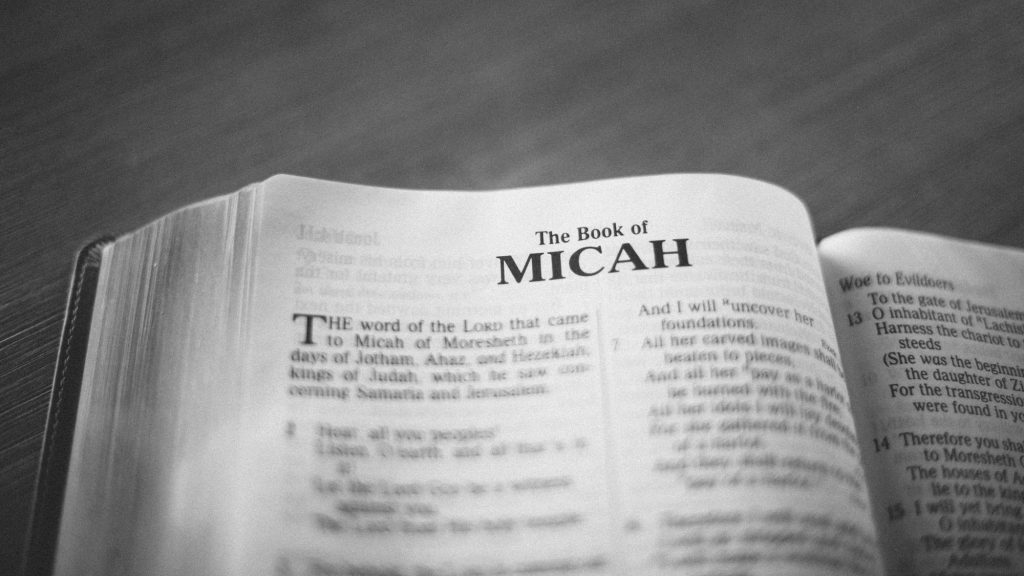
Study Tip: Micah

By Paula Wiseman


The Minor Prophets are so named not because their messages were any less important or inspired but because their writings were shorter. Often God called them to deliver one specific message and then they went back to their vocation. We're in the process of looking at what makes these short books relevant and worth a closer look.
 
Micah was another country boy, like Amos, called by God to deliver a harsh message, but, he preached to Judah while Amos preached to Israel. He was also a contemporary of Isaiah, and some scholars believe Micah delivered his message to the regular folks while Isaiah used his connections to address the upper class.
 
During Micah's day, there was relative peace and prosperity in Judah. However, the northern kingdom of Israel was about to fall to the Assyrians. A flood of folks were making their way south to escape the Assyrian threat, and bringing their Baal worship with them. A denunciation of idolatry is a major theme of Micah's message.
 
What to look for in Micah
The Case: The language and style of Micah is like that of an impassioned prosecutor making his case. Note the three times he uses the word "hear" (or "listen" in some translations) at the beginning of chapter 1, chapter 3 and chapter 6. Those mark off three sections, maybe three separate messages. What is the charge in each section? What evidence does he give? What hope does he offer the defendant, Judah?
 
The Last Days: (Or "that day" or the "latter days", especially in chapter 4) What will happen on "that day" or during those days? 
 
The Lines: Micah 5:2 may be the most familiar verse in the book due to its Christmas message. How does it fit in context though? Another well-known verse is 6:8. It's quoted a couple of times in the New Testament. How does it fit in context?


Habakkuk is up next!

Filed Under: Study Tip Tuesday Tagged With: Amos, Isaiah, Micah

(c) 2009-2025 Paula Wiseman & Sage Words · Site Developed by Paula Wiseman · Privacy Policy

We use cookies to ensure that we give you the best experience on our website. If you continue to use this site we will assume that you are happy with it.