PAULA WISEMAN

Faith and life meet in a story

  • Home
  • Fiction
    • Covenant of Trust Series
    • Foundations Series
    • Encounters Series
  • Bible Study
  • Devotional
  • Posts
    • Read All
    • Monday Meditations
    • Study Tip Tuesday
    • Wednesday Worship
    • Thursday in the Word
    • Writing Friday
  • Shop
  • VTreats
Home » resurrection » Page 3

Posts about the resurrection of Jesus (not necessarily an Easter series)

Easter was yesterday. What will we do TODAY?

By Paula Wiseman

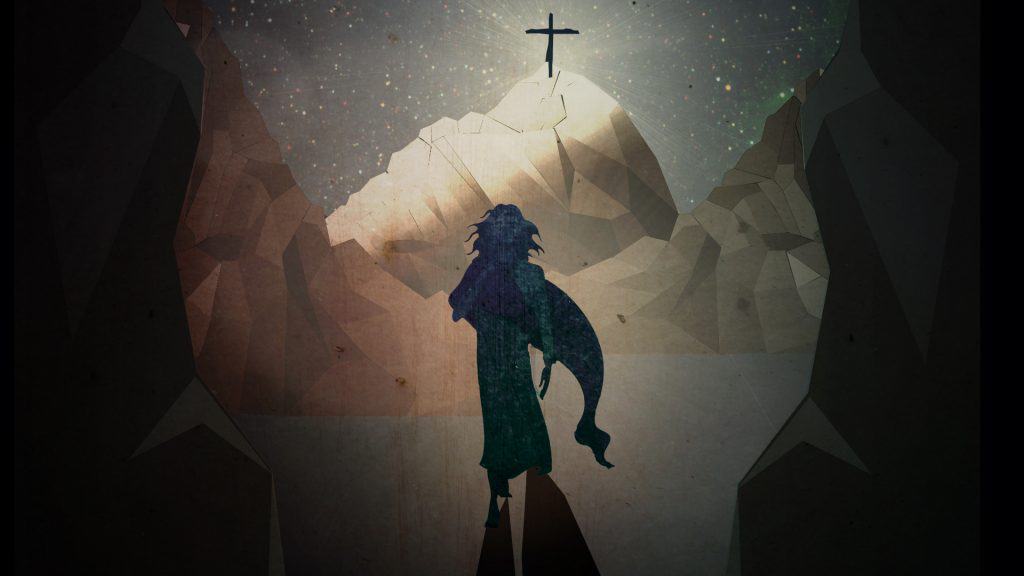
Easter was yesterday. What will you do today title graphic

What is different today because Jesus is alive?

And they worshiped Him, and returned to Jerusalem with great joy, and were continually in the temple praising and blessing God. Amen. Luke 24:52-53

Jesus Christ rose from the dead!
They saw Him, talked with Him, even ate with Him.
They couldn’t go back to the routine.

What did they do?
They worshiped Him.
Actively. Personally. Corporately.

They returned to Jerusalem.
According to His instructions.
To wait for the next step.

They exhibited great joy.
Not forced or fake. Not mere happiness.
Genuinely overflowing joy.

They were continually in the Temple.
Not squeezing it in amid other commitments.
It was their priority.

They were praising and blessing God.
Publicly. Authentically.
Honoring. Testifying.

Amen.
So be it.

Easter was yesterday.
What will you do TODAY?

Filed Under: Uncategorized Tagged With: Easter, Luke, resurrection

Journey to Easter: The Judgment Hall

By Paula Wiseman

Journey to Easter Judgment Hall title graphic

Pilate said to him, “What is truth?” After he had said this, he went back outside to the Jews and told them, “I find no guilt in him.” John 18:38

Jesus was not a victim of circumstance. He was not swept up by the events around Him. Every moment of His entire life was part of a divine plan laid down before time began. Each stop on the journey to Easter was purposeful and planned. Today’s stop is the judgment hall of Pilate, the Roman governor.

Pilate had been appointed governor or prefect around 26 AD, and like the rest of the Romans thought he was superior culturally, intellectually and morally to the Jews he ruled over. His appointment to this dead-end position was a signal that his career was over as far as advancement or promotion were concerned. So the Jewish people became the targets upon whom he vented his bitterness. He was harsh and provoked the Jews at every opportunity. At one point, he seized the Temple treasury to build an aqueduct. He brought imperial images into the holy city which was considered a blasphemous insult. To say he held the Jews in contempt was an understatement. Luke 13:1 makes reference to him murdering a group of Galileans in Jerusalem. Remember Galilee was outside his jurisdiction but was Herod’s domain. Galilee was also a known hotbed for anti-Roman sentiment and haven for insurrectionists. (Think the Easter Rising in Ireland in 1916 for a more modern type.) As soon as the band arrived in Jerusalem, Pilate made his move and had them slaughtered.

It is against this backdrop that Jesus, the king of the Jews, is delivered to his doorstep at the judgment hall early Friday morning. The charges were vague at best. “Doing evil.” (John 18:30) Pilate’s initial response was “I don’t have time for this.” But the charge that Jesus is an insurrectionist required further investigation. Pilate therefore said to Him, “Are You a king then?” Jesus answered, “You say rightly that I am a king. For this cause I was born, and for this cause I have come into the world, that I should bear witness to the truth. Everyone who is of the truth hears My voice.” (John 18:37)

Yes, but my mission is to bear witness to the truth. The truth is people are hopelessly separated from God because of their sins. I have come to reconcile and redeem them. (That’s reading between the lines a little.)

Pilate speaks for the skeptics across countless ages when he responds, “What is truth?”

It’s a fair question. In our culture, we’ve seen the rise of “personal truth”. Is that the answer? To the post-moderns, truth is something that everyone possesses and it is unique, but also malleable. However, if there is truth, doesn’t that also imply there is a lie? I don’t know that I’ve ever heard anyone claim, “What’s a lie for you, may not be a lie for me.”

The attraction of the “personal truth” is that it makes us, as individuals, the arbiters of truth, which in turn gives us complete moral authority, which means we never do anything wrong. Small wonder it’s appealing.

But if truth is an absolute, immutable reality, then it was established beyond me by someone greater than I am. And His pronouncements are that I have transgressed His character revealed in His law. He has the moral authority, then, levy punishment for those transgressions.

Rooted in Pilate’s response is the undertone that truth confers authority. He was used to wielding authority so he didn’t want to follow the truth business to its logical outworking.

At this stop on our journey, we are confronted with the same question. What is truth? Is it what Christ testified to, that we need a Savior? Or is it what we decide? And we continue to face this question every single day. Will we hold fast to what Christ says about us, about the Father’s love, about our security, about our empowerment and commission or will we define all those things in terms of culture, achievement, or identity?

What is truth? And more importantly, what will you do with the truth when you discover it? Pilate dismissed TRUTH and walked away. History says little about him after this moment. He faded into obscurity and then into eternity. Are our present-day struggles a direct result of dismissing, ignoring, or rationalizing truth?

Don’t move on from this stop at the judgment hall until you’ve considered what is truth?

Next stop: the Empty Tomb

Filed Under: Thursday in the Word Tagged With: Easter, John, Journey to Easter series, resurrection

The Seven I AM Statements: The Resurrection and the Life

By Paula Wiseman

the resurrection and the life title graphic

Jesus said to her, “I am the resurrection and the life. He who believes in Me, though he may die, he shall live.” John 11:25

The last three of the seven emphatic I AM statements Jesus makes in the Gospel of John are made in private. The declarations that He is Good Shepherd, the Door of the Sheep, the Light of the World and the Bread of Life were all made in front of the crowds. It should not be a surprise that these fuller, deeper revelations come to those closest to Him. Even so, each statement employs a metaphor to describe His salvation work. But in each of the conversations or discourses, He also exposes us.

You know the story.
Lazarus is dead. Jesus bluntly tells His disciples as much before they even get to Bethany. After a pointed delay, Jesus responds to the message from Mary and Martha to come. Martha meets Him and affirms (accuses) that if Jesus had come when they first sent for Him, Lazarus would have been healed. She is not wrong. Jesus certainly has power over diseases. He had proved it many times.

When Jesus heard that, He said, “This sickness is not unto death, but for the glory of God, that the Son of God may be glorified through it.” John 11:4

See that’s the key. This sickness is for the glory of God that the Son of God may be glorified through it. Martha and Mary saw the sickness from their perspective and with their priorities. Their brother, whom they loved dearly was hopelessly ill. So, of course, they turned to the One they know has both the power and the will to intervene.

Jesus, however, is just weeks away from the cross. His priorities, the Father’s priorities are different. This is not to say He didn’t love Martha, Mary, and Lazarus, because He clearly did. But His overarching purpose was to glorify the Father who in turn would glorify the Son. The greatest glory would come from the redemption of sinners.

Jesus expands on that a few verses later.

Jesus answered, “Are there not twelve hours in the day? If anyone walks in the day, he does not stumble, because he sees the light of this world.” John 11:9

There is an appointed time. And His references to the light of this world and those stumbling in darkness echo His mission–to seek and to save those who are lost.

But then Jesus is met by Martha. He declares to her I AM the Resurrection and the Life.

Resurrection comes from a Greek word that means standing again. That’s pretty straightforward. Miraculous, amazing, wondrous, yes. But it doesn’t need a lot of explanation. Every kind of death is reversed in Christ. Every kind. And forever.

But life … this is where things get interesting. This is not the natural life. Greek uses the word bios for that. Think biology. This is something different.

J. H. Thayer in his Greek-English Lexicon of the New Testament says “zoe is life real and genuine, a life active and vigorous, devoted to God, blessed, the portion even in this world of those who put their trust in Christ, but after the resurrection to be consummated by new accessions (among them a more perfect body), and to last forever (the writers of the O.T. have anticipated the conception, in their way, by employing ‏chaim to denote a happy life and every kind of blessing.”

  • Martha was asking Jesus to restore Lazarus’s bios. Jesus was offering zoe.
  • Martha was fixed on the present. Jesus wanted her to fix her eyes on eternity.
  • Martha was seeking consolation. Jesus was seeking the Father’s glory.

Time was short and those closest to Jesus didn’t understand what His ultimate purpose was. We read the account and shake our heads at their spiritual blindness. But hold on.

  • Do we cry out seeking consolation from Christ rather than His glory?
  • Are we focused on the present when Jesus wants us to realize there is so much more beyond this life?
  • Are we building a bios when Christ wants to draw us to zoe, life real and genuine, active and vigorous, devoted to God, enjoying every spiritual blessing?

Jesus said to her, “I am the resurrection and the life. He who believes in Me, though he may die, he shall live. And whoever lives and believes in Me shall never die. Do you believe this?” John 11:25-26

Jesus said to Martha, Jesus says to us, “I am the resurrection and the life … Do you believe this?”

Do you?

Filed Under: Thursday in the Word Tagged With: John, resurrection, The Seven I AM Statements series, words of Jesus

And They Went Back Home

By Paula Wiseman

Then the disciples went back to their homes. John 20:10

This is a stunning statement. Not on its face, but because of where it appears in the narrative. The disciples are Peter and John. They have just been to the tomb and found it empty.

And they went back home.

They saw with their own eyes physical evidence that what Jesus told them was true. He did, in fact, rise from the dead on the third day. They investigated the scene and everything made sense. They confirmed it and were confident in their conclusions.

And they went back home.

Even the shepherds who saw the newborn Jesus marveled at what they had seen and told everybody. Peter and John went home. That conveys that the experience was less thrilling than a basketball game, closer maybe to a fast food dinner.

Maybe it’s just not recorded that Peter and John were so overwhelmed by the experience they had to go lie down or something. Or maybe John didn’t want to focus too much attention on himself.

Or maybe John recorded exactly what happened, and immediately after verifying the tomb was empty … they just went back home.

Here’s the thing. We are even less impressed than Peter and John. We have the very words of God Himself, but it’s often a chore to read and study. We have access to the Maker of Heaven and Earth, but carving out time for prayer is tough. We are called to meet Him but worship is boring.

Every single day we are confronted with evidence of a risen savior at work in our lives. We benefit from His grace and presence and blessings and promises, but our days are mundane and lifeless. Maybe we’re so familiar with the story it doesn’t even register anymore. Maybe we don’t grasp what we’ve been saved from. Maybe we don’t realize why we needed salvation in the first place. Maybe we’re introverts.

Or maybe we’ve read on to Acts 4 where Peter and John are imprisoned and beaten for proclaiming that Jesus Christ raised from the dead to prove our sins could be forgiven and eternal life was possible, and we decided to keep quiet.

And just go back home.


Filed Under: Thursday in the Word Tagged With: Acts, John, resurrection

That I May Know Him

By Paula Wiseman

“[T]hat I may know Him and the power of His resurrection, and the fellowship of His sufferings, being conformed to His death,” Philippians 3:10

Paul has just said he gave up everything he had gained in ordered to know Christ.
This is experiential knowledge, not academic.
Being saved was the beginning of that knowledge rather than the end.

What is the power of His resurrection?
Assuring me the payment for my sins was accepted.
Being justified, made right, in the eyes of God.
Securing my future hope.
Imputing me with His own righteousness.
Becoming more Christ-like each passing day.
Raising me from spiritual death to life and walk as a new creation.
Encouraging me to endure whatever comes my way.
Counting me an heir to the great riches of heaven.
Enjoying access to God.
Receiving the indwelling Holy Spirit.

But Paul doesn’t stop there.

He wants to know, to experience the fellowship of His sufferings.
It is when we suffer that we learn what a Savior we have.
He is our High Priest touched with our infirmities.
He is the one who will never leave us nor forsake us.
He was tempted in points like we are so He responds to us with grace and mercy.

Paul wanted to be conformed to Christ’s death.
In Christ’s death, He exhibited the highest, unquestioning obedience to and trust in God the Father.
He was utterly focused and surrendered to carrying out the task the Father had given Him.

Can we say with Paul, O that I may know Him…?


Filed Under: Monday Meditations Tagged With: Apostle Paul, Philippians, resurrection

Do You Believe This?

By Paula Wiseman

Jesus told her, “I am the resurrection and the life. Anyone who believes in me will live, even after dying. Everyone who lives in me and believes in me will never ever die. Do you believe this, Martha?” John 11:25-26

Martha was grieving.
Her brother was dead.
Maybe unexpectedly. Maybe young.
And Jesus had arrived too late.

Or so it seemed.

Jesus is never too late.
He isn’t limited by our timetable.
Or our expectations.

Martha was looking for a miracle-worker.
She had miracle-worker level faith in Jesus.
He challenged her to go farther, deeper.

What He had done for Lazarus and for her and for Mary and anyone else who believes was a miracle so far beyond healing or raising someone from the dead.

Do you believe this?

Martha did.

Filed Under: Monday Meditations Tagged With: John, resurrection

  • « Previous Page
  • 1
  • 2
  • 3
  • 4
  • 5
  • Next Page »

(c) 2009-2025 Paula Wiseman & Sage Words · Site Developed by Paula Wiseman · Privacy Policy

We use cookies to ensure that we give you the best experience on our website. If you continue to use this site we will assume that you are happy with it.